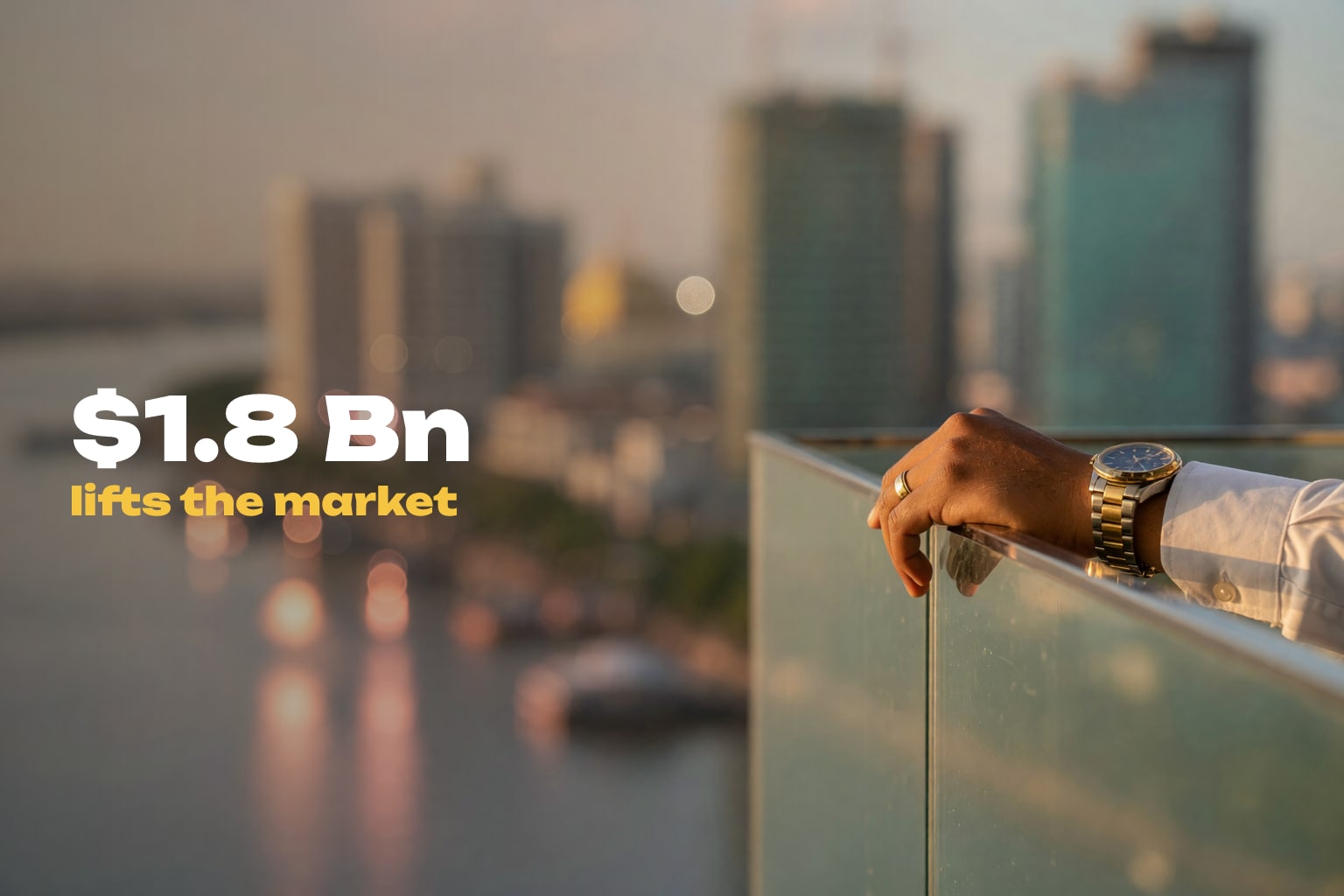
Cambodia SME Financing Forum 2026: What $1.8 Billion Means for the Property MarketTL;DR: At Cambodia's first National Business Financing Forum in July 2026, the government unveiled over $1.8 billion in active SME support — loans, guarantees, grants, and capacity programs — across eight state institutions. For real estate investors, this signals rising business activity, stronger tenant demand, and growing opportunities across commercial and residential segments.
Last updated: August 2026. Data sourced from official presentations at the National Business Financing Forum, July 30–31, 2026, Phnom Penh.
What Happened and Why Investors Should Pay Attention
On July 30–31, 2026, Cambodia held its first National Business Financing Forum at Sokha Phnom Penh Hotel & Residence. Chaired by Deputy Prime Minister and Minister of Economy and Finance Dr. Aun Pornmoniroth, the two-day event brought together around 600 participants — government ministries, development partners, financial institutions, business associations, and SME representatives.
The headline number: more than $1.8 billion in financing, guarantees, grants, and business support — already deployed or actively available through eight state institutions dedicated to SME development.
For anyone tracking Cambodia's real estate market, this is a meaningful macroeconomic signal. Access to capital drives business expansion. Business expansion drives demand for office space, retail units, warehousing, and housing. The two are structurally linked.
Who Is Deploying Capital and How Much?
Here's a breakdown by institution:
| Institution | Volume | Beneficiaries |
|---|---|---|
| SME Bank of Cambodia | $647M total | 3,982 enterprises |
| ARDB | ~$531M | Agri-sector, cooperatives, rice chains |
| CGCC (credit guarantees) | ~$588.4M | 9,891 loans; 92% to SMEs |
| EDF (grants) | $7M in 2024 | Startups and SMEs |
| Khmer Enterprise | $17M + $33M from partners | ~600 entrepreneurship projects |
| SDF (skills training) | $25.9M | 605 enterprises |
| Techo Startup Center | $356,000 | 117 startups, 62 digitization projects |
The CGCC credit guarantee mechanism deserves particular attention. By absorbing lender risk, it unlocks financing for businesses that previously lacked collateral — including those looking to lease or purchase commercial property. This directly expands the pool of qualified commercial tenants.
How Does SME Growth Translate Into Real Estate Demand?
The connection follows a well-established pattern across Southeast Asian markets:
- Commercial real estate — SMEs with access to credit open retail outlets, showrooms, and offices. More active businesses mean higher occupancy rates and stronger rents in key commercial corridors of Phnom Penh, Siem Reap, and secondary cities.
- Industrial and logistics property — ARDB's focus on agricultural value chains (rice accounts for ~35% of its loan portfolio) implies demand for storage, processing facilities, and transport infrastructure in provincial areas.
- Residential property — Job creation in the SME sector drives urbanization and demand for affordable-to-mid-range housing rentals and purchases.
- Tech and coworking space — TSC's support for 62 digitization projects and 117 startups signals a growing demand for modern, flexible workspaces.
The forum also emphasized outreach to provincial entrepreneurs — suggesting that real estate opportunities may extend well beyond the capital.
Which Locations and Sectors Look Most Promising?
Aligning investment thesis with the direction of state capital flows:
- Agricultural provinces — Battambang, Kampong Cham, Kampot. ARDB's agri-financing concentration suggests infrastructure growth and rising commercial activity.
- Phnom Penh — Cambodia's economic center remains the primary hub for SMEs, fintech, and digital economy players. Demand for Grade B and B+ office and residential space is durable.
- Special Economic Zones — KE and TSC programs targeting manufacturing and innovation clusters could support industrial property demand.
Honest caveat: Government SME financing affects real estate with a lag — typically 12 to 24 months. Don't expect immediate price appreciation in any specific micro-market based solely on a policy announcement.
Investor Due Diligence Checklist
Positive macro backdrop is not a substitute for property-level analysis. Key items to verify:
- [ ] Title status: Hard Title (LMAP) vs. Soft Title
- [ ] Local SME density — is there active business demand near the asset?
- [ ] Presence of CGCC or SME Bank operations in the area (indicator of business activity)
- [ ] Municipal infrastructure plans for the district
- [ ] Foreign ownership structure: strata title for condos, long-term leasehold, or LMAP-registered local entity
FAQ
Q: Can foreign investors access Cambodia's government SME financing programs?
A: Not directly. Programs run by CGCC, SME Bank, and EDF are designed for Cambodian residents and locally registered entities. A foreign investor may participate as a shareholder in a Cambodian company that then applies for support — but legal and compliance review is essential.
Q: How does SME financing growth affect commercial rental rates?
A: The mechanism is indirect but real: more credit-enabled businesses → more leases signed → higher occupancy → upward pressure on rents in active commercial zones. The effect typically materializes over 12–24 months as newly funded businesses scale.
Q: Will the National Business Financing Forum be held annually?
A: Organizers announced their intention to make it an annual event. For long-term investors, this signals a sustained, systematic government commitment to SME development — not a one-off initiative.
Q: Does CGCC's credit guarantee protect real estate investments?
A: No — CGCC guarantees business loans, not property investments. The indirect benefit for investors is reduced default risk among SME tenants whose borrowing is backed by state guarantees, which can improve the stability of commercial rental income streams.
Find the right property → nextoasis.io 💬 Telegram channel · property@nextoasis.io